
Foundation Work Built for Structural Loads
Concrete Foundations & Flatwork in Whitewood for buildings requiring stable footings, basement excavation, or structural slab preparation
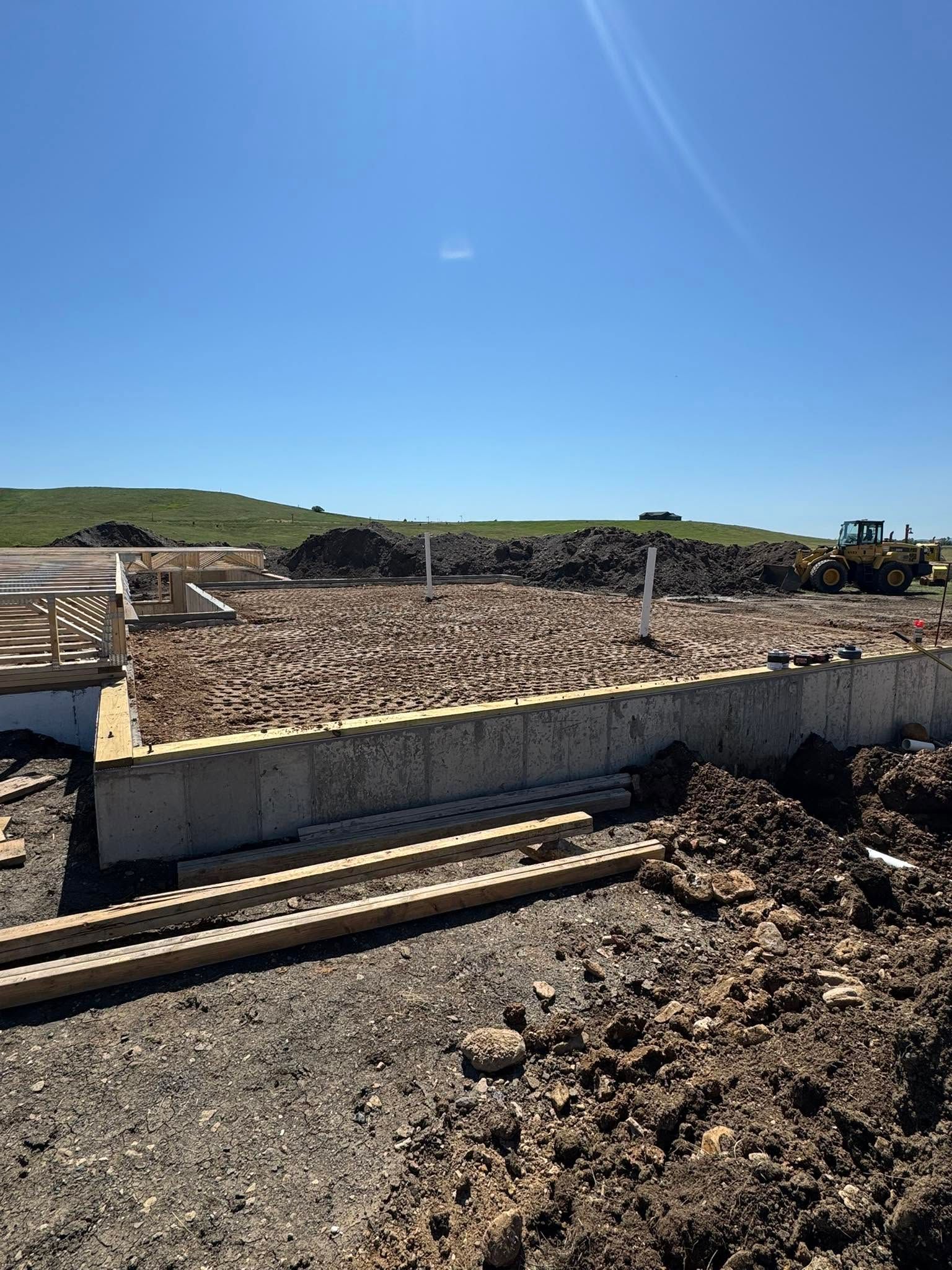
Foundation excavation in South Dakota must account for frost depth, soil bearing capacity, and drainage conditions that determine whether a structure remains level and crack-free through seasonal freeze-thaw cycles. Valley Dirt Movers LLC excavates and prepares sites for concrete foundations, cutting to engineered depths that place footings on undisturbed soil and establishing grades that direct water away from basement walls. Homes, garages, and commercial buildings all require this preparation before concrete is placed, and the excavation accuracy directly affects whether the foundation performs without settlement or water intrusion.
The process involves removing topsoil and organic material that would compress under structural weight, excavating to footing depth below the frost line, and creating level surfaces or stepped footings where grade changes occur. Formwork areas are cleared to allow precise placement, and excavated material is stockpiled for backfill or grading once the foundation cures.
Request a detailed estimate based on your foundation dimensions and site soil conditions.
How Foundation Excavation Addresses Settlement Risk
Foundation excavation removes unstable surface soils and exposes the load-bearing layer where footings will rest, with depths calculated to reach below seasonal frost penetration that can heave shallow foundations during winter. The excavation perimeter extends beyond the foundation footprint to provide working room for forming and waterproofing, and the bottom is leveled or benched to match engineering specifications that distribute structural loads evenly. Overexcavation is avoided because disturbed soil beneath footings compresses unpredictably, so the final dig stops precisely at design elevation on firm, undisturbed material.
Once concrete is placed and backfill is compacted against the cured foundation, you notice that basement walls remain dry because exterior grades slope away from the structure, floors stay level without cracks from differential settlement, and the building sits at the intended elevation relative to surrounding grade. Proper excavation eliminates the common failure mode where foundations settle unevenly because they were placed on loose fill or organic soils that compress under load over the first few years.
This service includes excavating to specified depth and dimensions, establishing level or sloped bottoms as required by foundation design, and stockpiling or hauling excavated material. It does not include concrete pouring, forming, or reinforcement installation, though timing is coordinated with concrete contractors to ensure readiness when forms are set and inspections are scheduled.
Common Questions About This Service
Foundation projects involve coordination between excavation, forming, concrete placement, and backfilling, and property owners often need clarity on what each phase requires and how weather or soil conditions affect the schedule.
What determines excavation depth for foundations in Whitewood?
Footing depth is determined by frost line requirements, typically 48 to 60 inches in this region, combined with the structural engineer's bearing depth specification based on soil type and building load, ensuring footings rest on stable material below freeze zones.
How does soil type affect foundation excavation?
Clay soils may require wider excavation for drainage provisions, sandy soils drain naturally but may need compaction verification, and rocky soils slow excavation but provide excellent bearing capacity once footings are seated on solid material.
What happens to the dirt removed during foundation excavation?
Excavated material is stockpiled on-site for backfilling around the foundation once concrete cures, or hauled off if the volume exceeds backfill needs or if the soil contains excessive organic content unsuitable for structural backfill.
Why is the excavation larger than the actual foundation size?
Extra width provides space for workers to set forms, install waterproofing membranes, and place drainage systems outside the foundation walls, with typical excavations extending two to three feet beyond the footing edges on all sides.
When can backfilling begin after concrete is placed?
Backfilling waits until concrete reaches sufficient strength to resist lateral soil pressure, usually at least several days depending on weather and mix design, preventing foundation walls from shifting or cracking under the weight of compacted fill.
Valley Dirt Movers LLC prepares foundation sites to meet engineering specifications and coordinates excavation timing with your construction schedule. Arrange an on-site consultation to review foundation requirements and site-specific excavation considerations.