
Underground Infrastructure That Performs Without Leaks
Utility Installation & Trenching in Whitewood for properties requiring water lines, drainage systems, or underground service placement
Valley Dirt Movers LLC handles utility trenching and excavation in Whitewood, preparing sites for water lines, drainage systems, and underground infrastructure that must function without failure for decades. The work involves cutting precise trenches at depths and grades that prevent future settling, pipe stress, or drainage backup. Properties with aging utility lines, new construction sites, or homes adding outbuildings or irrigation systems require this service when underground connections must be established or replaced.
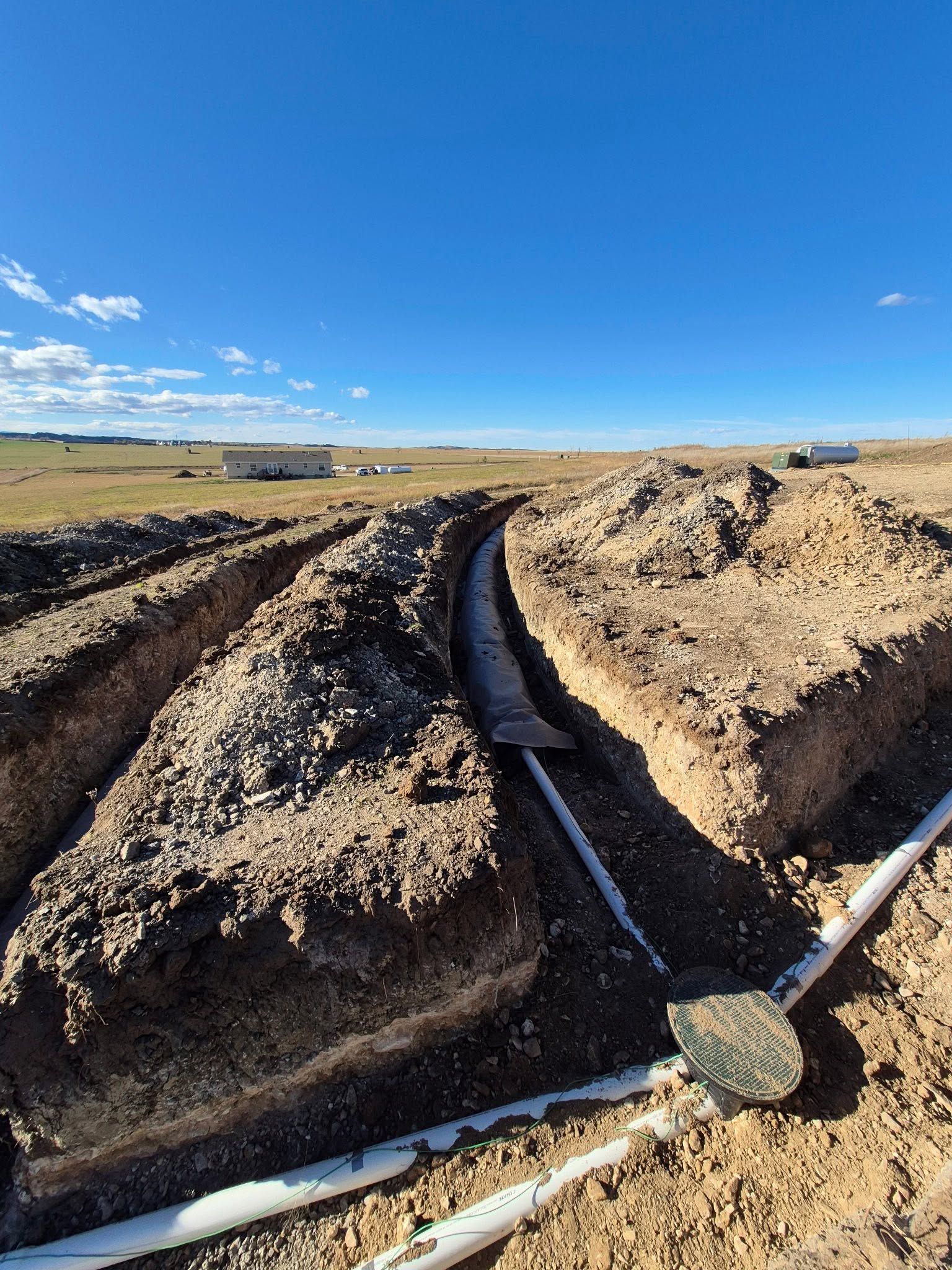
Trenching for utilities follows specific depth requirements based on the type of line being installed and local frost line considerations, which in South Dakota means water lines must sit below the freeze zone to prevent winter ruptures. The trench width accommodates the pipe diameter plus bedding material, and the bottom grade must slope consistently for drainage lines to move water effectively without low spots that trap sediment or create blockages.
Schedule a site evaluation to establish trench routing and depth requirements for your utility installation.
What Proper Trenching Prevents Long-Term
Utility trenching begins with locating existing underground services to avoid damaging electrical, gas, or communication lines during excavation. The trench is cut to engineered depth and width specifications, with sidewalls stable enough to allow safe pipe installation, and the bottom is leveled or graded depending on whether the line carries pressurized water or relies on gravity drainage. Bedding material is placed beneath the pipe to eliminate point loads that cause cracking, and backfill is compacted in layers to prevent surface settling that creates dips in driveways or lawn areas.
After installation and backfill, you notice that water flows consistently without air pockets or pressure drops, drainage lines clear completely without standing water, and the ground surface above the trench remains level through freeze-thaw cycles without sinking. Properly compacted trenches eliminate the common problem of driveway cracks or sidewalk settlement that appears months after utility work when backfill was placed loosely.
The service includes locating and marking existing utilities, excavating trenches to specified dimensions, placing bedding material where required, and backfilling with compaction once pipes are set. It does not include the plumbing or electrical work itself, though coordination with those trades ensures the trench preparation matches their installation requirements and timing.
Questions Before Starting Your Project
Utility installation projects in Whitewood often involve coordinating excavation timing with licensed plumbers or electricians, and property owners typically want to understand how the work sequence prevents delays or rework.
What depth is required for water lines in this region?
Water lines in South Dakota are typically trenched to at least 60 inches deep to sit below the frost line, preventing freeze damage during winter months when ground temperatures drop well below freezing for extended periods.
How is trench width determined for different utility types?
Trench width depends on pipe diameter plus clearance for bedding material and safe working space, with drainage lines requiring slightly wider trenches to accommodate proper slope verification and bedding placement along the entire run.
What happens if existing utilities are found in the planned trench path?
The trench route is adjusted to maintain required clearance from existing lines, or the depth is modified if vertical separation is possible, ensuring no conflict with electrical, gas, or communication infrastructure already in place.
Why does backfill need compaction if it's just going to settle naturally?
Uncompacted backfill settles unevenly over months, creating surface depressions that collect water, crack pavement, or damage landscaping, while compacted backfill in layers produces stable ground that holds grade immediately.
When should utility trenching be scheduled relative to other site work?
Trenching is typically completed after rough grading establishes site elevations but before final landscaping or paving, allowing utility lines to be installed and tested without disturbing finished surfaces or requiring excavation through completed work.
Valley Dirt Movers LLC coordinates utility excavation with your project timeline and trade schedules to keep installation moving efficiently. Contact us to discuss trench specifications and site preparation requirements for your underground utility work.