Surfaces Built to Drain Correctly
Grading & Site Development in Whitewood for properties requiring drainage correction and proper building elevations
Sites that drain poorly, slope toward structures, or lack consistent elevation cause water pooling, foundation leaks, and erosion that worsens with every storm. Valley Dirt Movers LLC reshapes ground surfaces using rough and finish grading techniques, adjusting elevations to direct water away from buildings and toward drainage channels or collection points. Grading creates surfaces that shed rainfall predictably, maintain stable soil conditions around foundations, and provide level areas where construction or landscaping will occur once development work is finished.
Rough grading establishes overall site elevations and major drainage slopes using heavy equipment that moves large volumes of soil, while finish grading fine-tunes surfaces to precise elevations needed for pavement, concrete slabs, or landscaping installation. The process involves adding fill where ground must rise, cutting away high spots, and compacting soil layers so surfaces don't settle unevenly after construction loads are applied.
Schedule a property evaluation to identify drainage concerns and elevation adjustments needed for your site.
What Changes After Grading Work Completes
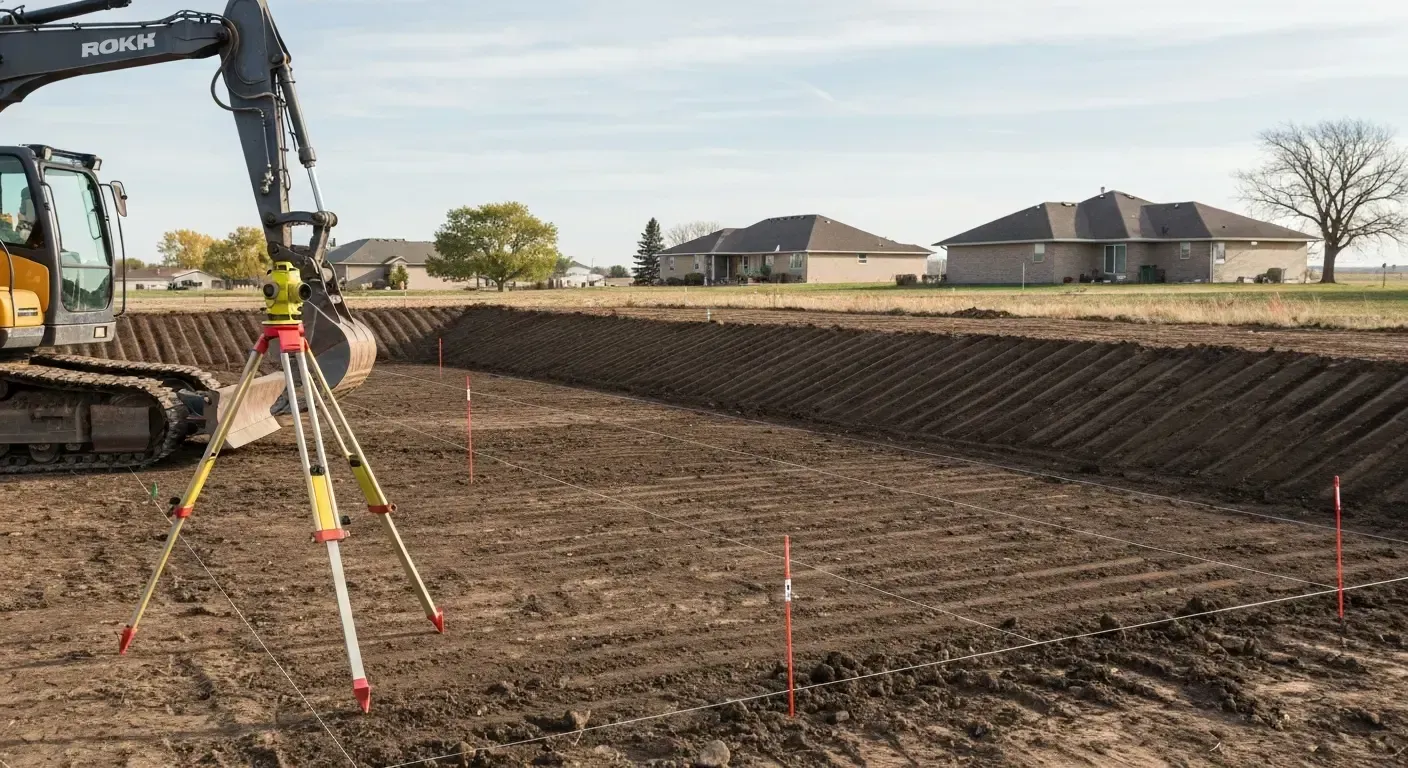
Grading begins with survey data that defines target elevations across the property, then operators move soil to match those elevations while creating slopes that drain at rates appropriate for soil type and site use. Equipment compacts fill areas in lifts to prevent future settling, and surfaces are smoothed to eliminate low spots where water would otherwise collect during rainfall.
After grading is complete, you'll see ground surfaces that slope consistently away from foundations, water that flows toward designated drainage areas during rain events instead of pooling near structures, and level building pads ready for concrete work or pavement installation. Soil firmness increases across graded areas compared to untouched ground, and erosion slows because water moves across the site in controlled paths rather than cutting random channels through loose soil.
Site development includes elevation adjustments, drainage slope creation, and soil compaction, but does not include installing subsurface drainage systems or applying erosion control measures such as seeding or silt fencing. Properties with significant elevation changes may require retaining walls or terracing to achieve proper drainage, which affects grading design and the volume of soil that must be moved or imported.
What Property Owners Usually Ask
Grading and site development in Whitewood require balancing drainage needs with construction elevations, and these questions cover what property owners typically want to understand before grading begins.
What determines the slope created during grading work?
Slopes are set based on soil type, drainage requirements, and local codes, with typical minimum grades ranging from two percent for lawns to steeper slopes for swales and drainage channels that handle concentrated runoff.
How is soil compaction verified during site development?
Operators compact fill material in layers no thicker than eight to twelve inches, using equipment weight and vibration to achieve density levels that prevent settling, with compaction sometimes tested using proctor tests on critical areas.
When should grading occur relative to other construction phases?
Rough grading happens after excavation and utility trenching are complete but before final surfaces are installed, while finish grading occurs immediately before pavement, concrete, or landscaping work begins to prevent regrading from being necessary.
What site conditions in Whitewood affect grading work?
Clay soils common in the area compact differently than sandy soils and require moisture management during grading, and seasonal freeze-thaw cycles mean grading work scheduled in spring must account for soil that may still be saturated from snowmelt.
How does grading prevent water from reaching foundations?
Surfaces are sloped to carry water at least ten feet away from foundation walls before allowing it to flatten or collect, reducing hydrostatic pressure against basement walls and preventing soil saturation near footings.
Valley Dirt Movers LLC coordinates grading work with construction schedules to ensure proper elevations are ready when needed. Request a detailed estimate based on your site's current drainage patterns and target elevations.